


Most people have never heard the word OMAD.
That's about to change.
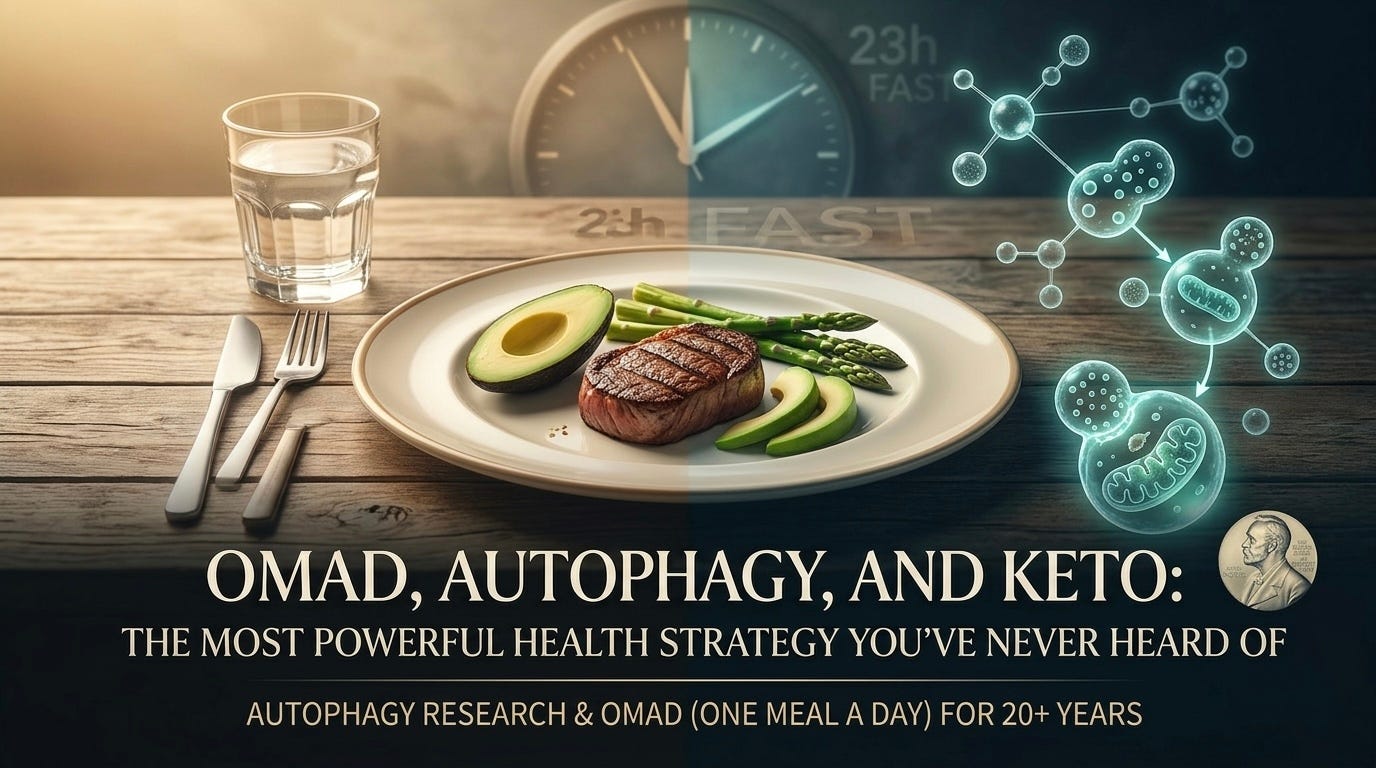
OMAD stands for One Meal a Day — a form of intermittent fasting in which you eat once, fast for approximately 23 hours, and repeat.
I have been doing this for over 20 years.
Not because a doctor told me to.
Not because I read a study.
Because it worked — and kept working.
When Japanese scientist Yoshinori Ohsumi won the Nobel Prize in Physiology or Medicine in 2016 for his research on autophagy, I finally had a name for what my body had been doing all along.
What Is Autophagy — and Why It Changes Everything
Autophagy comes from the Greek for "self-eating."
It is the process by which your body breaks down and recycles damaged cells, misfolded proteins, and dysfunctional components.
Think of it as the body's built-in cleaning and repair system.
The key trigger? Fasting.
When you stop eating, insulin levels drop.
After 16–18 hours, autophagy begins to activate in earnest. By hour 20–23 — the OMAD window — autophagy is running at full capacity.
This is not a wellness trend.
This is Nobel Prize-winning science.
